Blog
Haftungsausschluss : The views shared in this blog are for informational purposes only and highlight general trends in spatial computing.

Jonnah Razel
In 2025, businesses are no longer just operating in the digital world—they are immersed in it . From retail and real estate to healthcare and manufacturing,
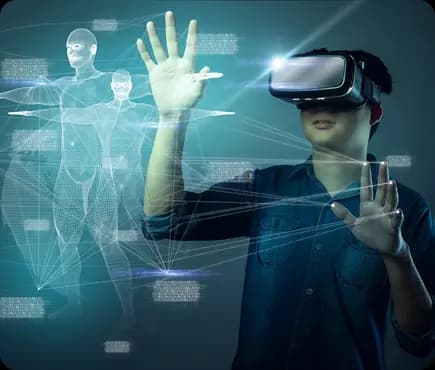
spatial computingis reshaping the way industries design, collaborate, and deliver value. By combining Augmented Reality (AR), Virtual Reality (VR), Mixed Reality (MR), 3D design, and advanced spatial data processing, organizations are unlocking a new era of efficiency, creativity, and customer engagement.
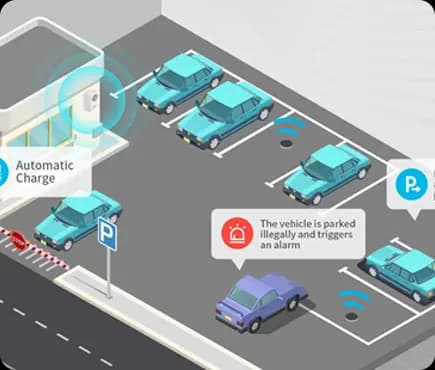
Spatial computing refers to the ability of digital systems to understand and interact with the physical world. By blending real-world environments with digital overlays , it allows companies to create immersive experiences—whether that's navigating a parking lot with AR (like Obrive's Obpark) or exploring a home virtually before it's built (like OBNEST).
In 2025, spatial computing is no longer experimental—it’s the backbone of modern business operations.
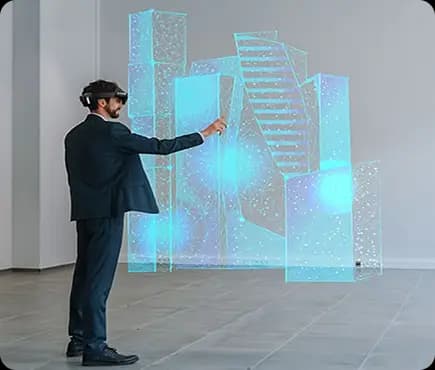
Through platforms like Obnest, buyers can walk through properties virtually, while architects leverage 3D design and MR to collaborate on blueprints in real time—reducing costs and errors.
Spatial computing is being used in VR-based medical training, remote patient care, and AR surgical assistance—improving outcomes and reducing risks.
Solutions like Obpark AR Smart Car Navigation System bring real-time overlays, parking availability, and navigation insights directly into drivers’ views, enhancing both safety and convenience.
Immersive experiences create deeper emotional connections with brands.
By 2025, spatial computing is not just an add-on—it’s a necessity. Businesses that harness AR, VR, MR, 3D design, and spatial data processing are setting new benchmarks for innovation and customer experience.
At Obrive Industries, we empower companies to step into this immersive future through pioneering solutions like Obpark and Obnest, and a full suite of AR/VR/MR services designed for tomorrow’s challenges.