Blog
免責事項 : The insights shared in this blog are for informational purposes only and reflect general industry perspectives.

Jonnah Razel
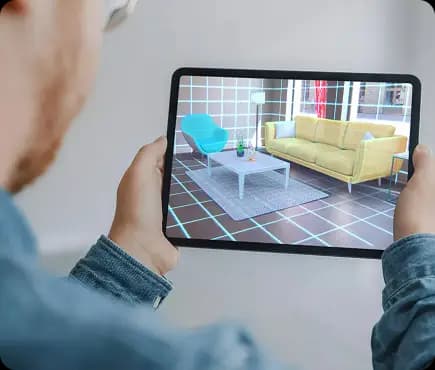
The world of immersive technology is evolving rapidly, and terms like Augmented Reality (AR), Virtual Reality (VR), and Mixed Reality (MR) are shaping how businesses innovate in 2025. While many use these technologies interchangeably, each offers unique capabilities that serve different industries and business goals.
In this blog, we’ll break down the key differences between AR, VR, and MR, and explore real-world business use cases that highlight their impact across industries.
Urban mobility in 2025 is at a crossroads. With rising car ownership, limited parking spaces, and congested city centers, drivers spend nearly 20 minutes on average searching for a spotin major metros. The solution? AR-powered car parking systems—a fusion of augmented reality navigationand real-time smart parking insight sthat’s redefining how we move and park in urban environments.
Increased traffic congestion around malls, offices, and residential complexes
These challenges not only frustrate drivers but also impact urban mobility and sustainability..
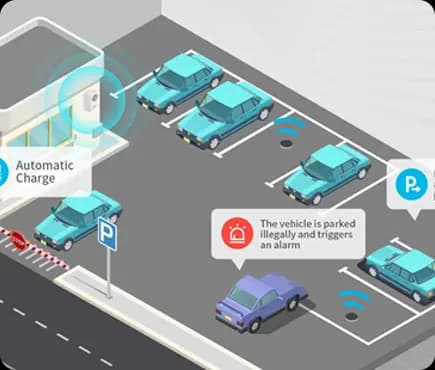
An AR-powered parking system uses a combination of
spatial computing, IoT sensors, and real-time mapping
to guide drivers directly to available spots. Through a smartphone or AR-enabled HUD, drivers see:
AR navigation overlays directing them to the nearest available slot
Real-time availability alerts synced from IoT-enabled parking sensors
Dynamic guidance inside GPS-dead zones like underground parking basements
This immersive AR navigation experience transforms parking from guesswork into precision..
🚦 Reduced Traffic Congestion: Faster parking means fewer vehicles circling.
⏱️ Time Savings: Real-time AR navigation cuts down search times dramatically.
🌍 Eco-Friendly Impact: Less fuel wasted equals lower carbon emissions.
🏢 Scalable Across Industries: From shopping malls to smart cities, airports, and corporate campuses.
Smart Cities: Urban planners are adopting AR parking to optimize traffic flow.
Retail & Malls: Enhances customer experience with seamless entry-to-exit parking.
Real Estate: Residential and commercial complexes integrate AR systems as a selling point.
Airports: Reduces parking chaos during peak travel hours.
By 2030, AR-powered car parking will merge with Autonomous Vehicles and AI-driven urban mobility ecosystems. Imagine cars not just finding, but also reserving and self-navigating into parking spots —all powered by immersive AR dashboards.
AR-powered parking is more than a convenience—it’s a transformational shift in urban mobility. With solutions like and Obpark by Obrive, cities and enterprises can
streamline parking, reduce congestion, and build smarter, greener futures.