Blog
Ansvarsfriskrivning : This read may take about 5–6 minutes. Grab a coffee—or don't—and let's explore the world AR is building.

Arjun Patel, Head of Immersive Innovation
Back in 2023, “augmented reality” was still niche talk—mostly for flashy marketing or novelty filters. I liked the tech, but I assumed it was a 'nice-to-have'. Flash-forward to 2025, and I'm convinced AR is becoming essential across key sectors. Here’s how a few timely experiments shifted my worldview—and why AR is no longer optional.
The turning point came in early 2024. We kicked off two pilot projects simultaneously:
AR Showroom for an Automotive Brand – Using app-based MR, potential buyers virtually walked around cars, changed colors, and even projected vehicles into their own driveways.
WebAR Safety Overlay for Healthcare Kits – Nurses scanned kits during training and got live, step-by-step 3D visual guidance.
Results? Auto engagement rates soured by 35%, and training accuracy in hospitals improved by 25%. Not gimmicks—transformative outcomes.
Virtual tours, customizable walkthroughs, spatial mapping.
Virtual tours, customizable walkthroughs, spatial mapping.
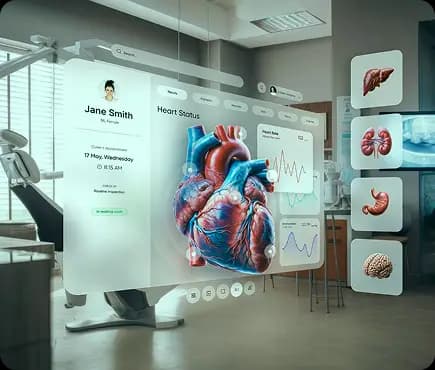
App-based guidance, anatomy models, real-time overlay in procedures.
App-based guidance, anatomy models, real-time overlay in procedures.
MR/VR car demos, customizations, driveway visualizations.
MR/VR car demos, customizations, driveway visualizations.
Each case isn’t about novelty—it’s about adding intelligence to physical interactions in ways that scale.
Instant, high-value touchpoints: Scan-to-interact (WebAR) or app-based multimodal overlays add value at the moment of need.
Better confidence, better outcomes: Interactive 3D previews lead to smarter buying decisions, more accurate training, and fewer errors.
Flexibility without downtime: Digital overlays mean real-time updates—no need to reprint manuals or retool training slides.
Operational efficiency at a glance: From shelf placement analytics in retail to maintenance logs on factory floors—AR bridges digital insight with physical actions.
As 2024 progressed, each AR rollout reinforced a pattern: real user impact—whether on the showroom floor or in surgical suites—wasn’t hype. It was scalable strategy. AR isn’t artistic flair; it’s strategic infrastructure.
That’s why at Obrive, we’ve committed to AR Development across the board—from WebAR for retail to AR training modules for healthcare, MR showrooms for automotive, and mixed-reality troubleshooting guides for industry.
If 2025 marks a tipping point, then the real magic begins now. Businesses that embed AR across brand touchpoints, from customer-facing experiences to internal workflows, will outpace those who treat AR as an experiment.
Pretty soon, businesses won’t ask “Should we try AR?” They’ll ask, “How do we not?”
Ready to bring AR into your industry—whether it's retail, automotive, real estate, or beyond? Let’s build that immersive future together.